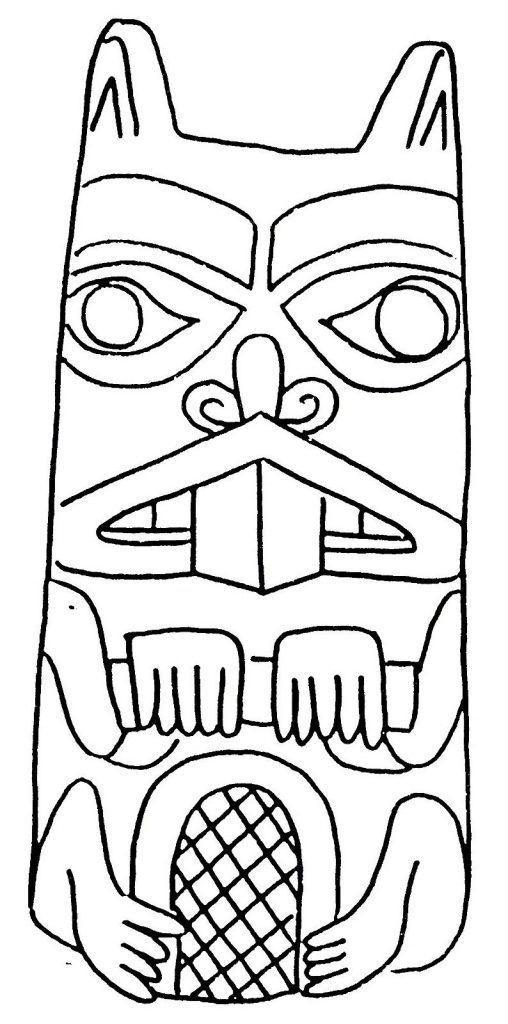
A growing collection of high-resolution coloring sheets — animals, cartoon characters, holidays, and more. Print and enjoy at home or in the classroom.
Explore the CollectionWelcome
Coloring Fun for Every Child
presentcontemporaryart brings together an extensive library of free printable coloring pages. From friendly giraffes and adventure-time characters to seasonal holiday sheets, there is something here to spark every child's creativity. All pages are easy to download and print at high resolution — perfect for rainy afternoons, classroom activities, or quiet time at home.
Animals & Nature
Giraffes, goldfinches, orioles, and woodland creatures — a wide selection of animal coloring pages for young nature lovers.
Cartoon Characters
Adventure Time, Land Before Time, Justin Time, and more beloved characters ready to be brought to life with color.
Holidays & Seasons
Halloween, New Year, and seasonal coloring sheets to celebrate special times throughout the year.
How to make a coloring book from your child’s drawings
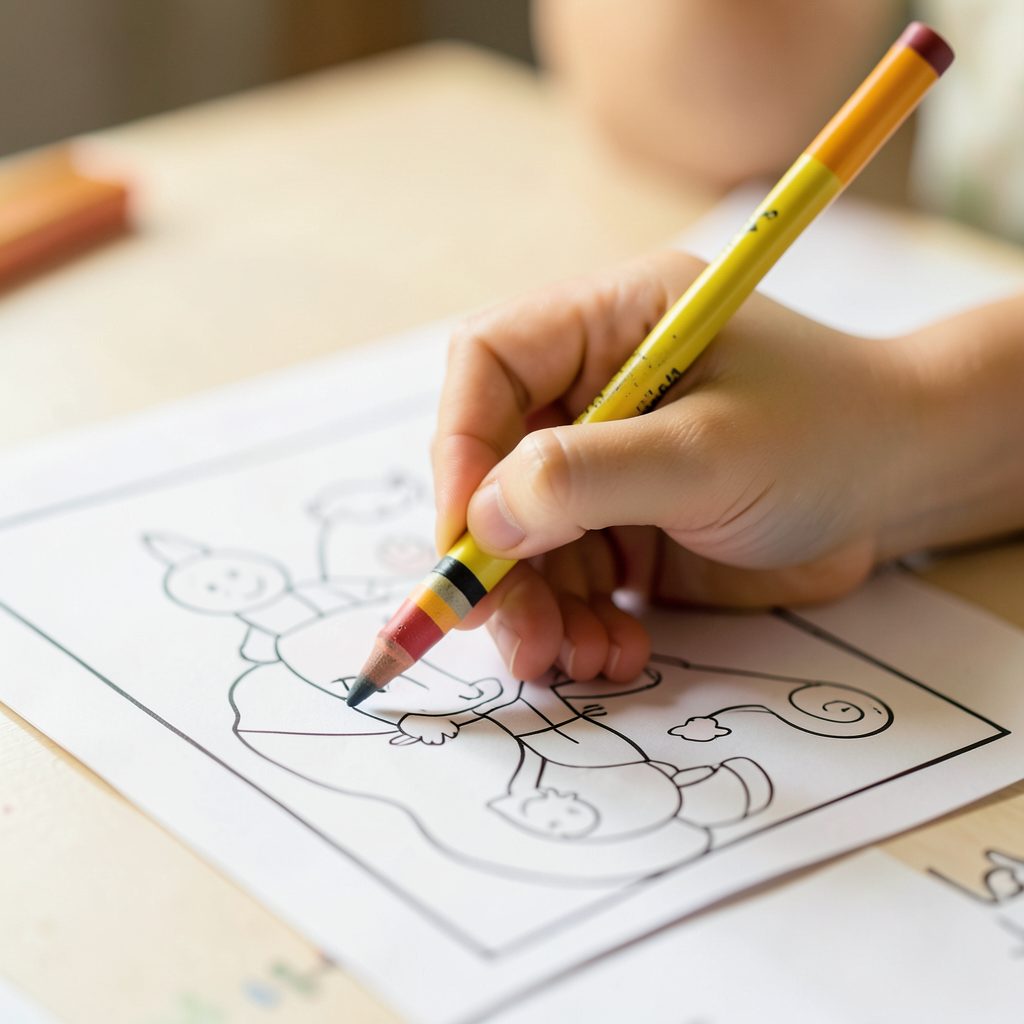
Turning your child’s sketches into a colouring book keeps their imagination visible while creating something useful for quiet afternoons, school-holiday activities or shared family time. It can include favourite animals, invented characters, family routines and the small observations children notice during everyday life around Australia.
You can make the project with a phone, a scanner and a home printer, or use a local print service for a polished edition. The essential steps are to preserve the original drawings, prepare clear line images, design printable pages and assemble them in a comfortable format. This guide explains how to make a coloring book from your child’s drawings without specialist publishing equipment.
Select and prepare the artwork
Begin with a small, coherent group—perhaps eight to twenty drawings from one theme or one year. A manageable set is quicker to scan and makes a book that feels complete rather than like a folder of unrelated pages. Ask your child to choose a sequence, then write the suggested order on the back of each sheet.
Handle originals as keepsakes. Date each drawing and note the artist’s first name or nickname, but keep full names, schools, addresses and other identifying details off pages intended for wider circulation. Store the sheets flat in a folder between sessions so folds, crumbs and sticky tape do not damage them.
Scan or photograph each drawing
A flatbed scanner generally produces the clearest digital copy. Scan at 300 dpi, save each page as a high-quality PNG or TIFF and check that light areas remain white rather than grey. Make a second copy for editing so the original file is never accidentally cropped or changed.
A phone works well too. Place the drawing on a plain surface near a window, switch off the flash and shoot from directly above. Tap the page to lock focus, adjust the brightness and crop away the surrounding surface. Apps such as Microsoft Lens or Snapseed can straighten and clean the image, while the phone’s basic editor is sufficient for simple corrections. Back up every file before beginning the layout.
Create colouring-friendly pages
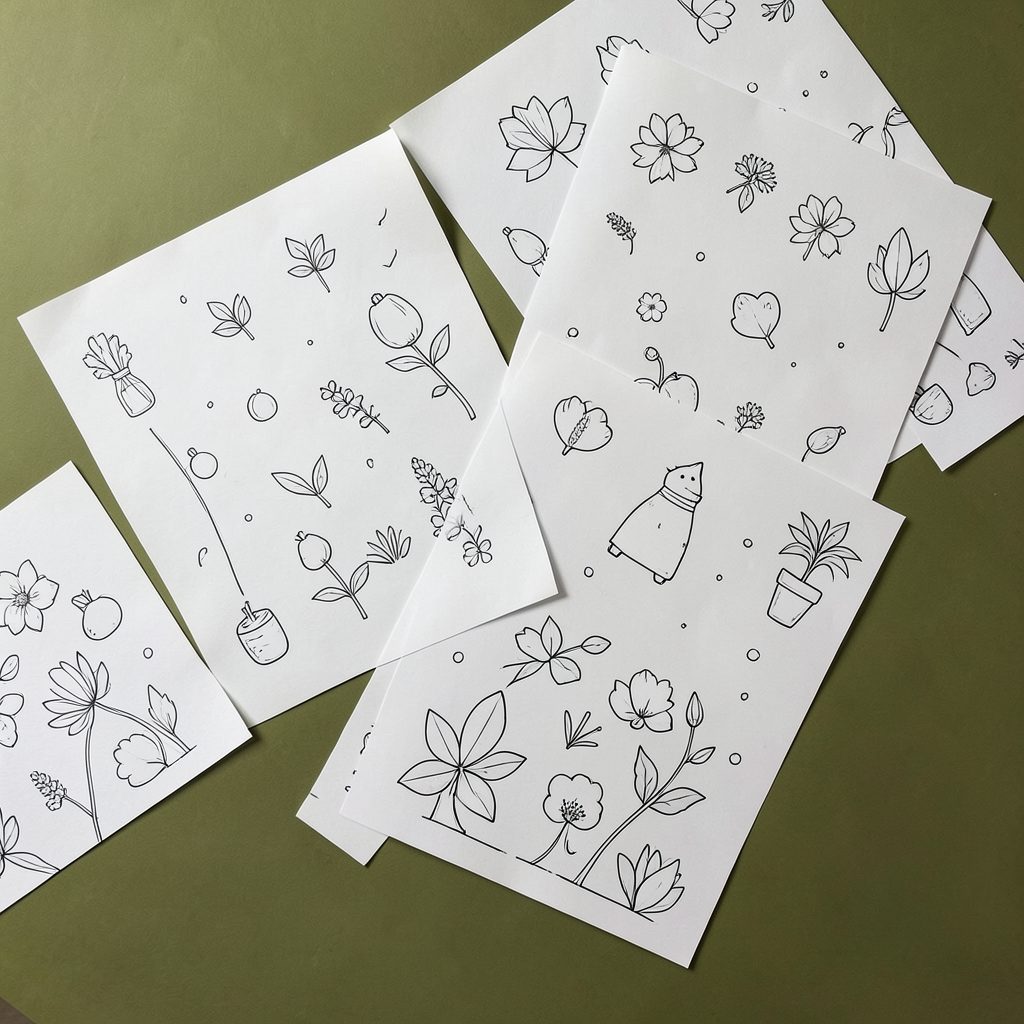
Import each picture into a program such as Canva, Adobe Express, Affinity Designer, InDesign or the free image editor GIMP. A tracing tool can follow the original lines, while threshold and contrast controls can turn photographs into simpler black outlines. Keep a small, faint version of the original as a reference and place a clean, dark outline on the colouring area.
Design most pages in A4 portrait orientation. Leave at least 15 millimetres around the edges and add another 5 millimetres on the binding side. Titles should sit well away from the trim area, and page numbers can appear in a footer. Thick black lines and uncomplicated shapes will produce more satisfying results than tiny details that disappear when printed.
Add a simple title page, a short credit naming the young artist and a note such as “Drawn and coloured by…” Use the year of creation rather than sensitive personal information. Check that every illustration has been duplicated correctly before preparing the final print file.
Arrange and assemble the pages
Organise the digital pages in the order chosen by the artist. A useful sequence begins with the cover, followed by a blank dedication page and then twelve to twenty-four illustrations. A short activity or message page can give children ideas for extending each scene, but leave plenty of uncoloured space for their own additions.
For a home edition, print the pages on single-sided A4 sheets and add a 200-gram card cover from an Australian stationery or office-supply shop. Staple the upper-left corner or punch holes and thread each one with ribbon. For a smaller booklet, print two portrait pages on each landscape sheet, fold the paper and staple the centre; booklet-printing settings will arrange the pages automatically.
Print and bind for Australian use
A4 is the standard paper size for Australian printers, schools and office-supply stores. Paper is commonly sold in 500-sheet reams, while inkjet cartridges and ink-tank printers give families several printing options. Always test one page on ordinary A4 before running the complete edition, especially if the drawings contain light pencil or fine marker lines.
Print only the outline pages in black and white if they will be coloured by hand. A colour cover and a few full-colour reference images can provide contrast without requiring every interior page to use expensive ink. Public libraries in Sydney, Melbourne, Brisbane and other cities may offer low-cost printing, although services and charges vary between councils.
| Printing option | Best suited to | What to expect in Australia | Main consideration |
|---|---|---|---|
| Home inkjet | Drafts and small family runs | Standard A4 paper and widely available ink cartridges | Low setup cost, although photo-heavy pages use more ink |
| Colour home printer | Keepsakes with bright reference images | Suitable for cover pages and selected illustrations | More vivid results, but colour cartridges can cost more |
| Public library | Occasional black-and-white copies | Some branches offer printing for a small fee | Availability and charges differ between councils |
| Local print shop | Neat classroom or gift editions | Suburban and CBD shops can print, fold and staple short runs | Higher unit price, but usually a more polished finish |
| Online print service | Orders across Australia | Postage can exceed printing costs for very small orders | Convenient, but allow extra delivery time |
For classroom sets, a local print shop can produce short runs on A4 stock and add a card cover without requiring registration. Test the first copy with a child before duplicating it, since paper orientation and line visibility can vary between printers.
Share the book responsibly
A handmade edition makes a thoughtful birthday or end-of-year gift, while class copies can help children discuss the stories behind their drawings. Credit the original artist on every copy, and obtain permission before using a child’s name or likeness beyond the family. Free printable colouring pages from Present Contemporary Art can also be included alongside the personal illustrations to create a mixed activity booklet.
The Copyright Act 1968 governs artistic works in Australia. A parent or guardian may hold the economic rights in a minor’s drawings, while the young creator retains moral rights, so obtain clear agreement before reproducing, publishing or selling copies. A paid edition may also fall under the Australian Consumer Law, requiring clear prices, terms and refund information.
When sharing online, remove metadata that may contain a device location or date, and avoid showing school logos, uniforms or a child’s full name. The Privacy Act 1988 and Australian Privacy Principles may apply when identifiable information is handled by a business or organisation. A carefully made book preserves the marks of childhood creativity and can be coloured, shared and treasured for years.
Also Discover
A Legacy in Contemporary Art
Beyond coloring pages, presentcontemporaryart has a history as an association of art collectors and patrons — Associazione di Collezionisti e Mecenati. The organization promoted international exhibitions connecting Chinese, Italian, and international artists, with past events in Shanghai and Berlin.



Ready to Start Coloring?
Browse the full collection of free printable coloring pages — all just a click away.
View All Coloring Pages