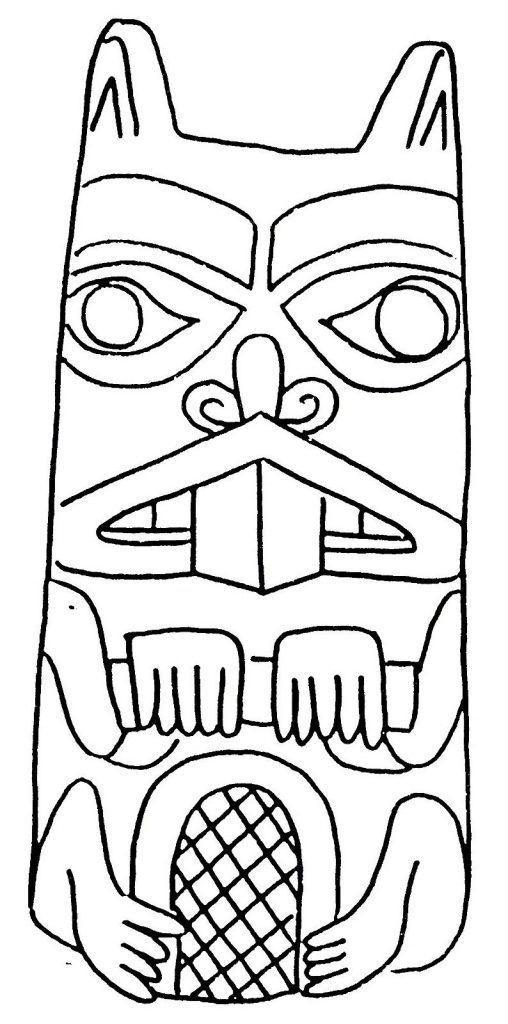
A growing collection of high-resolution coloring sheets — animals, cartoon characters, holidays, and more. Print and enjoy at home or in the classroom.
Explore the CollectionWelcome
Coloring Fun for Every Child
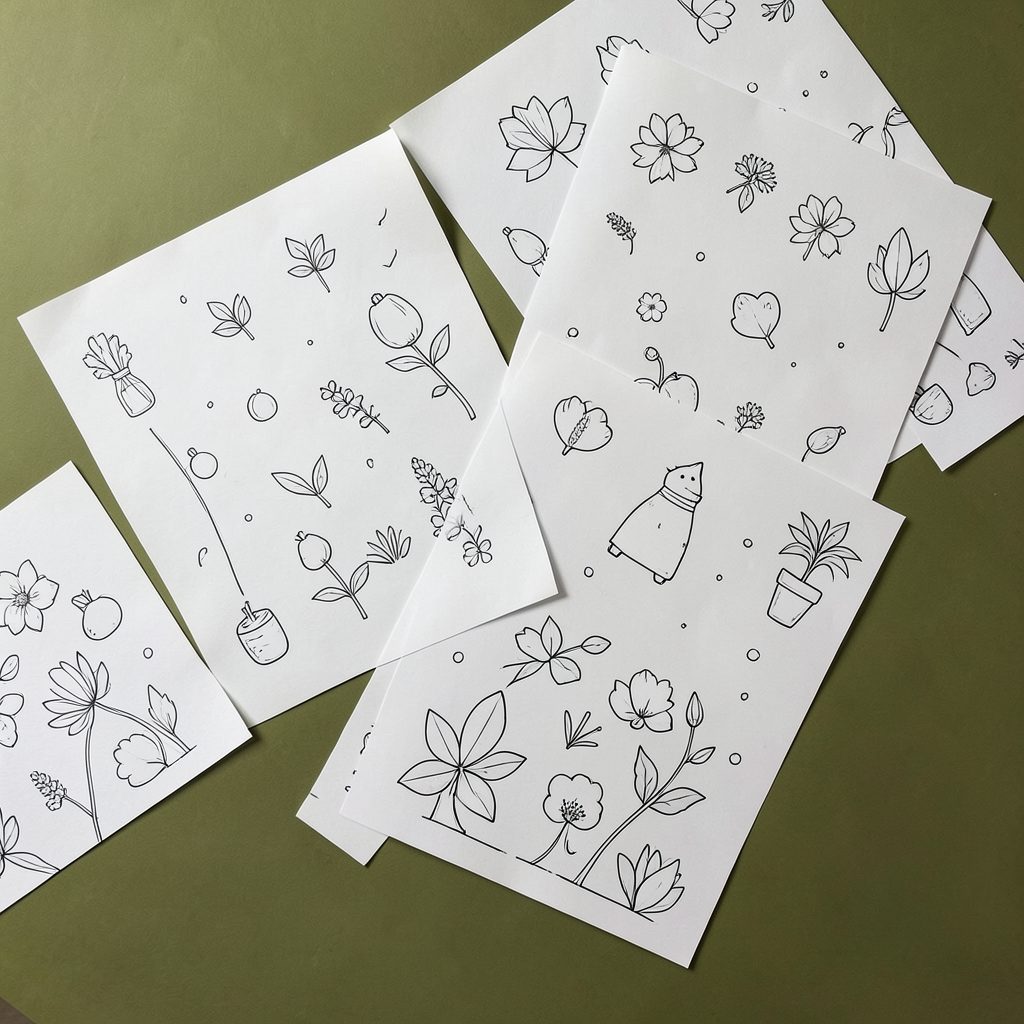
presentcontemporaryart brings together an extensive library of free printable coloring pages. From friendly giraffes and adventure-time characters to seasonal holiday sheets, there is something here to spark every child's creativity. All pages are easy to download and print at high resolution — perfect for rainy afternoons, classroom activities, or quiet time at home.
Animals & Nature
Giraffes, goldfinches, orioles, and woodland creatures — a wide selection of animal coloring pages for young nature lovers.
Cartoon Characters
Adventure Time, Land Before Time, Justin Time, and more beloved characters ready to be brought to life with color.
Holidays & Seasons
Halloween, New Year, and seasonal coloring sheets to celebrate special times throughout the year.
Coloring pages for learning about the five senses
Colouring pages for learning about the five senses give children a simple way to explore sight, hearing, smell, taste and touch. As they colour familiar objects, they can name body parts, describe sensory experiences and connect pictures with everyday life.
Printable activities work well at home, in Australian early learning settings and in primary classrooms. A child in Sydney might draw the salty smell of the sea, while a child in Melbourne may describe the sound of rain on a classroom window. The activity is creative, low-cost and easy to adapt for different ages.
| Sense | Picture prompts | Useful learning words | Follow-up activity |
|---|---|---|---|
| Sight | Eyes, rainbow, torch, flowers | Bright, dark, colour, shape | Find matching colours |
| Hearing | Ears, drum, birds, bell | Loud, soft, high, low | Identify safe sounds |
| Smell | Nose, soap, flowers, herbs | Sweet, fresh, strong, earthy | Compare familiar scents |
| Taste | Tongue, fruit, vegetables | Sweet, sour, salty, bitter | Describe food flavours |
| Touch | Hands, textures, ice, wool | Smooth, rough, hot, cold | Sort objects by texture |
Make the senses visible
A five-senses colouring sheet can introduce one sense at a time or show the whole body with labelled eyes, ears, nose, tongue and skin. Younger children can practise naming each body part, while older students can add arrows, captions and examples from their own surroundings.
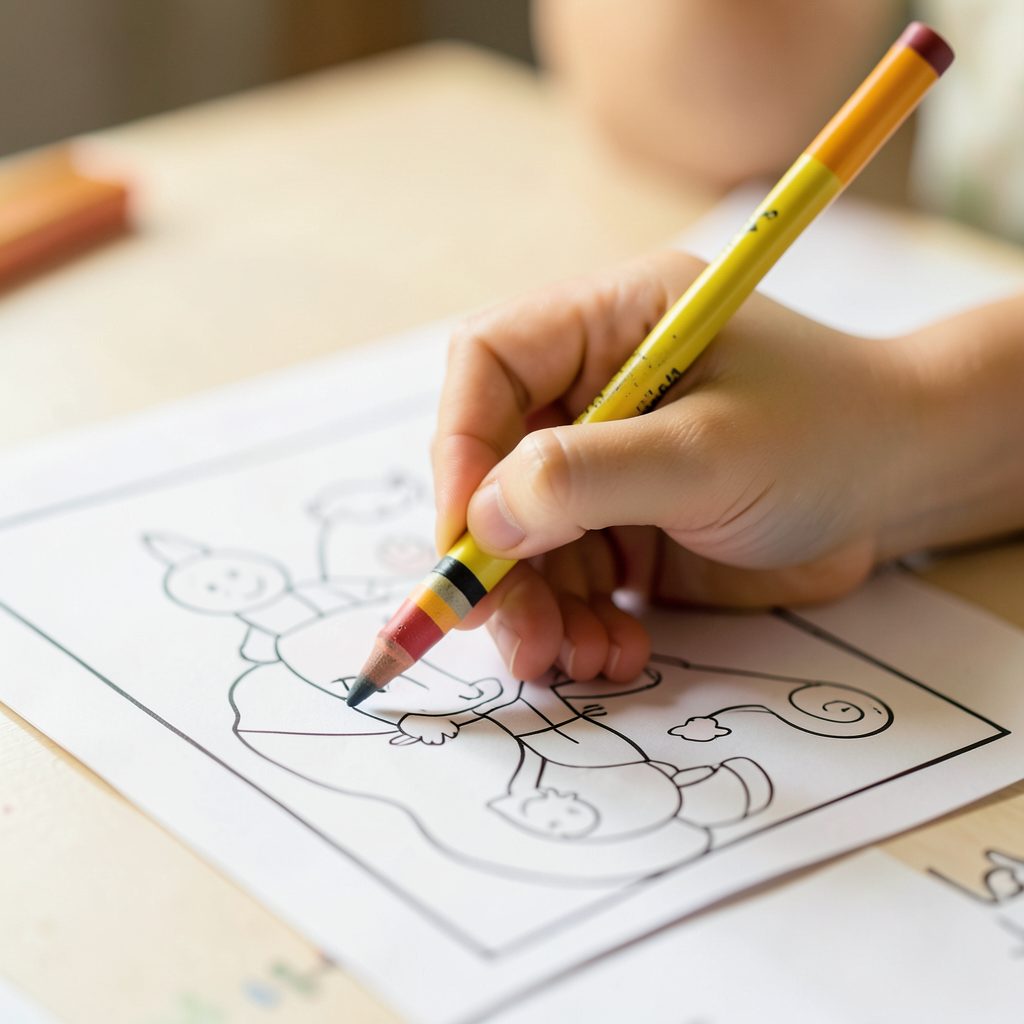
Choose images with clear outlines and enough open space for crayons, pencils or markers. Large shapes are easier for preschool children, whereas detailed scenes suit students who are developing fine-motor control. Printing in black and white also lets children make decisions about colour rather than simply copying a finished example.
Explore sight through colour
Sight is easy to connect with colouring because children can experiment with light, shade, patterns and contrast. Ask them to colour a rainbow, describe a bright yellow flower or use dark blue for a night sky. They can then explain which colours are easy to notice and which blend into the background.
Animal pictures provide familiar examples of eyes, patterns and camouflage. A pet animal colouring page can lead to a discussion about how cats, dogs and fish use their eyes in different ways. Children might compare a pet’s eye colour with their own or draw an animal that would be difficult to see in grass or sand.
Listen, smell and taste
Hearing activities can begin with pictures of ears, musical instruments, birds or household objects. Children may colour a loud drum in bold shades and a quiet feather in pale tones. In an Australian classroom, students could listen for a school bell, traffic, birds in the playground or rain, then classify each sound as loud, soft, high or low.
Smell and taste are best taught with familiar, safe examples. Pictures of lemons, strawberries, fresh bread, eucalyptus leaves and soap can encourage descriptive language. Children should never be asked to taste an unknown item or smell a strong substance closely. Instead, an adult can offer ordinary foods or scents and check allergies before the activity.
Discover touch with textures
Touch pages can show hands exploring smooth glass, rough bark, soft fabric, cool ice or warm sunlight. Children can fill each object with lines, dots or patterns that represent its texture. This encourages them to think beyond colour and use words such as bumpy, slippery, furry and hard.
A simple texture hunt can extend the printable activity. At home, children might compare a wool jumper, a wooden spoon and a cushion. At a beach near Perth or on a bushwalk outside Canberra, an adult can point out natural textures without asking children to handle anything sharp, hot, prickly or unsafe.
Use printables in everyday learning
Colouring becomes more meaningful when children talk about what they notice before, during and after the activity. Adults can model complete sentences, accept different observations and introduce new vocabulary naturally.
Useful prompts for guided discussion:
- Which body part helps you notice this?
- Does it feel, sound or look different from another object?
- What word describes its colour, texture or flavour?
- Can you find an example at home or school?
Australian educators can connect the activity with the Australian Curriculum by combining science observation, oral language, visual arts and fine-motor practice. The pages also suit rainy-day activities during school terms, holiday programs and quiet table work in early learning centres.
Print responsibly and adapt the lesson
Families can print pages at home, while teachers may use a school printer or a local retailer such as Officeworks when preparing a larger pack. Keep the paper size suitable for children, and offer thicker paper or cardboard for painting, collage and sensory displays.
When using printable resources in Australia, follow the creator’s terms and remember that the Copyright Act 1968 applies to copying and distribution. Personal and classroom use may be permitted by the resource terms, but selling altered pages, uploading them elsewhere or reproducing an entire collection requires permission.
Ways to extend the finished artwork:
- Add labels for each sense and body part.
- Create a class mural divided into five sensory zones.
- Match real objects to the correct coloured picture.
- Make a vocabulary wall with child-friendly descriptions.
Children do not all experience sensations in the same way, so avoid presenting one response as the only correct answer. A child may dislike a particular smell, find a sound overwhelming or prefer looking rather than touching. Offering quiet choices, breaks and different materials keeps sensory learning comfortable and inclusive.
Also Discover
A Legacy in Contemporary Art
Beyond coloring pages, presentcontemporaryart has a history as an association of art collectors and patrons — Associazione di Collezionisti e Mecenati. The organization promoted international exhibitions connecting Chinese, Italian, and international artists, with past events in Shanghai and Berlin.

Ready to Start Coloring?
Browse the full collection of free printable coloring pages — all just a click away.
View All Coloring Pages